Within South Australia UFOs
Was the Wewak Light a UFO or Something Ordinary?
The 1960 Wewak report shows how Cold War secrecy, nuclear testing and cautious official inquiry shaped South Australian UFO files.
On this page
- The Maralinga setting
- What witnesses and officials reported
- Meteor, static electricity or unknown
Page outline Jump by section
Introduction
The Wewak light was a short, puzzling sighting reported on 15 July 1960 near Maralinga, in the South Australian desert, during the period of British nuclear weapons work. It matters because it was not just a casual “flying saucer” story: it was recorded in a confidential Weapons Research Establishment report, involved police and technical witnesses, and occurred at Wewak, a site used for Vixen A tests about 15 miles, or roughly 24 kilometres, from Maralinga Village. The best reading is cautious. The light was real enough to trigger an official inquiry, but the surviving file does not prove an exotic craft. Officials considered several explanations, including a meteor, static electricity around balloons, distant vehicle lights and Harry Turner’s more dramatic suggestion of a satellite cone or “flying saucer”. The case remains interesting less as proof of a UFO than as a revealing example of how South Australian UFO records were shaped by Cold War secrecy, nuclear testing and official risk management.[NAA]naa.gov.auNAAUFO sightings at weapons testing site, Woomera | naa.gov.auNAAUFO sightings at weapons testing site, Woomera | naa.gov.au
The Maralinga setting
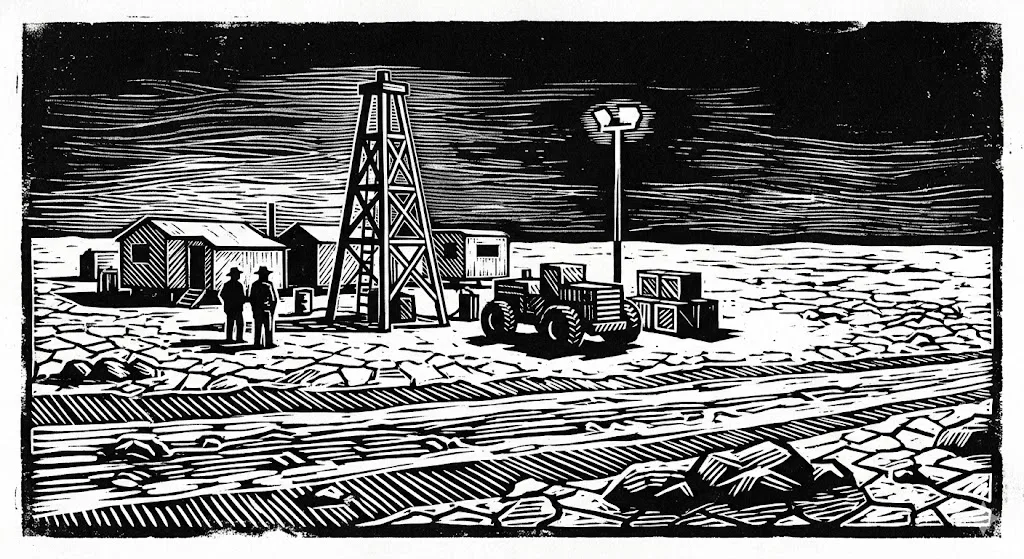
Maralinga gives the Wewak report a seriousness that many light-in-the-sky stories do not have. Britain conducted nuclear weapons testing in Australia from 1952 to 1963, with sites including Monte Bello Islands, Emu Field and Maralinga; Maralinga was developed as the permanent proving ground after a British request in 1954 and became the location for later major and minor trials.[NAA]naa.gov.auNAABritish nuclear tests at Maralinga | naa.gov.auNAABritish nuclear tests at Maralinga | naa.gov.au
By 1960, the spectacular atomic detonations of Operation Buffalo in 1956 and Operation Antler in 1957 were over, but Maralinga was still active. The National Archives notes that after the two major trial series, minor trials, assessment tests and experimental programmes continued at the range until 1963.[NAA]naa.gov.auNAABritish nuclear tests at Maralinga | naa.gov.auNAABritish nuclear tests at Maralinga | naa.gov.au The Wewak area was not an incidental backdrop: the Wewak site was associated with Vixen A tests, and the 1960 report itself begins by noting that static balloons used in instrumentation were present there.[NAA]naa.gov.auNAAUFO sightings at weapons testing site, Woomera | naa.gov.auNAAUFO sightings at weapons testing site, Woomera | naa.gov.au
That setting changes how the case should be read. A bright light near Maralinga could not be dismissed solely as pub talk or newspaper excitement, because the range involved restricted work, instrumentation, balloons, scientific staff, security personnel and military communications. At the same time, that same environment increases the number of ordinary but unusual-looking explanations. Balloons, flares, test activity, aircraft, reflections, atmospheric effects and meteors all become more plausible in a technical range setting than they might be in a suburban sighting.
The broader history also warns against romanticising the site. Maralinga was not just a mysterious outback testing ground; it was a place of real contamination, secrecy and harm. ARPANSA states that the main cause of contamination at Maralinga was the minor trials, which dispersed radioactive materials over smaller areas at higher levels than the major detonations.[ARPANSA]arpansa.gov.auARPANSABritish nuclear weapons testing in Australia | ARPANSAARPANSABritish nuclear weapons testing in Australia | ARPANSA The National Museum of Australia notes that Australian authorities did not discover the extent of contamination until 1984, just before land was due to be returned to Aboriginal owners.[nma.gov.au]nma.gov.auMaralinga | National Museum of AustraliaMaralinga | National Museum of Australia That does not explain the Wewak light, but it explains why a small official UFO file from this place carries more historical weight than its brief duration might suggest.
What witnesses and officials reported
The core event was brief. According to the confidential report dated 24 July 1960, Constable Hubert Dave Scarborough, stationed at Wewak, telephoned at 7.15 pm to report that a balloon had burnt in the air. This was a reasonable first interpretation because balloons were being used in instrumentation at the Vixen A site. The balloon officer then inspected the equipment and found that all balloons were intact.[NAA]naa.gov.auNAAUFO sightings at weapons testing site, Woomera | naa.gov.auNAAUFO sightings at weapons testing site, Woomera | naa.gov.au
When questioned, Scarborough said he had been in his caravan at about 7.05 pm when he noticed a light “of approximately the power of bright moonlight” playing on the ground. He went outside and saw a white light travelling from east to west. As it appeared to come nearer, or to grow larger, it turned red. He thought at first that it was a balloon on fire, partly because of its position and height. The report recorded that estimating its size was difficult because its distance was unknown, but Scarborough judged that it occupied about one and a half to two degrees of the horizon and lasted about thirty seconds.[NAA]naa.gov.auNAAUFO sightings at weapons testing site, Woomera | naa.gov.auNAAUFO sightings at weapons testing site, Woomera | naa.gov.au
A second police witness, Constable Richard Henry Maxwell, was outside a caravan at Roadside, 13 miles from Maralinga Village. He saw a light at about 7 pm from the direction of Wewak, but the report stresses that it made little immediate impression on him: he did not mention it to his companion until Scarborough later telephoned asking whether the light had also been seen from Roadside.[NAA]naa.gov.auNAAUFO sightings at weapons testing site, Woomera | naa.gov.auNAAUFO sightings at weapons testing site, Woomera | naa.gov.au
Four people in Maralinga Village also saw a light at about the same time. They were named in the report as Captain Keith Angus Ross, catering officer; Trevor James Hoskins, technical assistant in the Health Physics Group; Russell McFarlane Kingsley, fitter in the Department of Mines; and Ian Kenneth Haskard, supervising technician in the Postmaster-General’s Department. They described a light over the REME workshop building in the village, coming from the general direction of Wewak. Their estimates of duration varied from two to fifteen seconds, which the report suggests may partly reflect the moment each witness first noticed the light.[documents.theblackvault.com]documents.theblackvault.comUFO sightings at weapons testing siteUFO sightings at weapons testing site
The report also shows what investigators tried to rule out. Woomera was asked whether a firing had taken place and been visible in the area; the result was negative. A party from Exoil Pty Ltd camped near Emu was contacted to ask whether they had seen a meteor; again the result was negative. A possible aircraft photo-flash was rejected because no aircraft was known to be in the area and no known photo-flash lasted as long as fifteen seconds. Scientific personnel were also questioned in case the event was a practical joke, but the report says assurances were given that no member of the scientific parties was responsible.[documents.theblackvault.com]documents.theblackvault.comUFO sightings at weapons testing siteUFO sightings at weapons testing site
Meteor, static electricity or unknown
The final official wording is the key to the case. Security Officer J. J. A. Hanlon wrote that all avenues of inquiry at Maralinga had been covered and that it was not possible to positively identify the source of the light. He then added that it was “felt” to have been either a meteor or static electricity. That is not a firm solution. It is an official preference after inquiry, with the source still unidentified.[NAA]naa.gov.auNAAUFO sightings at weapons testing site, Woomera | naa.gov.auNAAUFO sightings at weapons testing site, Woomera | naa.gov.au
The meteor explanation has strengths. A bright meteor, or fireball, can appear suddenly, move rapidly across the sky, change colour, last only seconds, and be seen from scattered locations. A white-to-red colour change is not in itself extraordinary for a burning object in the atmosphere. The short durations reported by the village witnesses, from two to fifteen seconds, fit this broad pattern better than they fit a slow craft hovering over a range.
But the meteor explanation also has weaknesses in this file. Scarborough’s estimate of thirty seconds is long for a typical brief meteor, though not impossible for an unusually long fireball or for a witness under stress misjudging time. His report that the light seemed to play on the ground like bright moonlight also gives the case a more local, luminous quality than a routine meteor account. The report does not mention a recovered object, a known meteor track, or a wider confirmed fireball report that would close the case.
The static electricity idea is more specifically tied to Wewak. A scientific officer suggested that the light could have been caused by St Elmo’s fire around the static balloons. The balloon officer said that although the balloons were earthed, enough static electricity could sometimes build up to electrify the anchor vehicle. The report adds that three balloons were in line with the observed position from Wewak and about half a mile from the caravan. Hanlon even tried to research static electricity at the Adelaide Public Library, but found little useful information beyond an encyclopaedia description of St Elmo’s fire as a brush-like atmospheric electrical glow, usually on pointed objects in stormy weather.[NAA]naa.gov.auNAAUFO sightings at weapons testing site, Woomera | naa.gov.auNAAUFO sightings at weapons testing site, Woomera | naa.gov.au
That explanation is attractive because it uses equipment actually present at the site. It does not require unknown aircraft or a visiting spacecraft. Yet it also has problems. St Elmo’s fire is usually a localised glow on pointed or conductive objects, not a travelling light moving east to west and seen from multiple locations as coming from the general direction of Wewak. The report itself does not say that weather conditions were stormy or electrically active at the time. It reads more like a plausible range-specific hypothesis than a demonstrated cause.
The most controversial interpretation came from Oliver Harry Turner, the health physics officer. Hanlon’s report says Turner made an independent investigation and extensive calculations, concluding that the light was not a natural phenomenon but an unidentified flying object, “either a cone from a satellite or a ‘flying saucer’.”[NAA]naa.gov.auNAAUFO sightings at weapons testing site, Woomera | naa.gov.auNAAUFO sightings at weapons testing site, Woomera | naa.gov.au Later UFO researchers have treated Turner as important because he was not merely a casual witness: he had scientific training, worked in the Maralinga environment, and had a longer-standing interest in official UFO analysis.[Project 1947]project1947.comkb uasgovkb uasgov
Turner’s involvement makes the case more interesting, but not automatically stronger. A technically trained person can ask better questions, but can also bring prior interest and interpretive bias. The surviving public report gives Hanlon’s summary of Turner’s view, not Turner’s full calculations. Without those calculations, readers cannot test his reasoning in detail. The official file therefore leaves two things true at once: Turner’s view deserves mention, and it does not override the limits of the evidence.

Why this case matters in South Australian UFO history
The Wewak light is a good example of why South Australian UFO history differs from a simple catalogue of strange sightings. The event sits inside a dense official landscape: the Weapons Research Establishment, Maralinga security, Woomera communications, police witnesses, health physics staff, balloon instrumentation and nuclear testing records. The National Archives describes the document as part of a Department of Supply file on the Weapons Research Establishment and notes that it was later transferred to the Royal Commission into British Nuclear Tests in Australia.[NAA]naa.gov.auNAAUFO sightings at weapons testing site, Woomera | naa.gov.auNAAUFO sightings at weapons testing site, Woomera | naa.gov.au
That archival path matters. It means the report survived not because it was celebrated as an alien mystery, but because it belonged to the paperwork of a sensitive defence and nuclear programme. For researchers, this makes it more valuable than many newspaper-only UFO stories. It gives names, times, places, alternative explanations and a formal conclusion. It also shows the cautious style of official Cold War inquiry: investigators did not simply say “flying saucer”, but neither did they ignore the report once range security and technical operations were involved.
The case also demonstrates a recurring trap in interpreting UFOs near military or nuclear sites. The setting feels dramatic, so it is tempting to treat the location as evidence of extraordinary significance. Yet the location also supplies many mundane sources of unusual observations. In the Wewak case, the first report was explicitly of a possible burning balloon, and the final official possibilities were a meteor or static electricity. The nuclear-test setting makes the report worth preserving and investigating; it does not by itself make the light otherworldly.
There is also a political and cultural layer. The National Archives notes that UFO sightings became common during the Cold War amid political and military tensions, espionage anxieties, weapons tests, satellite tests and popular science-fiction imagery.[NAA]naa.gov.auNAAUFO sightings at weapons testing site, Woomera | naa.gov.auNAAUFO sightings at weapons testing site, Woomera | naa.gov.au The Wewak report sits exactly in that atmosphere. A red light near a nuclear range in 1960 could be read as a security problem, a scientific curiosity, a natural phenomenon, a secret technology, or a “flying saucer”, depending on the reader’s assumptions.
What later reporting adds
Later reporting has mostly reinforced the case’s historical interest rather than proving a dramatic answer. In 2021, ABC News cited the declassified National Archives document when discussing Australia’s historical UFO records near defence sites. The article noted that Australia’s Department of Defence said it did not have a protocol covering the recording or reporting of UFO or UAP sightings, while also pointing back to older cases such as Wewak.[ABC News]abc.net.auOpen source on abc.net.au.
Civilian UFO researchers have added useful cross-references, especially by placing Wewak alongside other Maralinga and Woomera-area reports. Keith Basterfield’s 2021 summary of Maralinga UAP material highlights the same key details: Scarborough’s white light turning red, Maxwell’s sighting from Roadside, four village witnesses, no Woomera rocket firing, and Turner’s conclusion that it was a UFO.[UFOs Scientific Research]ufos-scientificresearch.blogspot.comUFOs Scientific Research Maralinga, South Australia, atomic testsUFOs Scientific Research Maralinga, South Australia, atomic tests His South Australian catalogue also records additional wider reports around the same evening, including a bright light and loud bangs reported from a homestead far to the north-west of Woomera and a reddish glow from Giles weather station, though those linked entries rely on compiled secondary reporting and need careful separation from the narrower Wewak file.[australianufoarchives.files.wordpress.com]australianufoarchives.files.wordpress.comsa ufo reports 1902 to 1987sa ufo reports 1902 to 1987
Those later accounts help readers see that Wewak was not just a single isolated sentence in an archive. They also introduce a risk: the more the case is retold, the easier it is for the nuclear setting, Turner’s “flying saucer” phrase and later UAP interest to overshadow the file’s modest facts. The most reliable core remains the 24 July 1960 report: a bright white-to-red light, multiple witnesses, no confirmed balloon fire, no known Woomera firing, no aircraft photo-flash, and no positive identification.
A fair verdict on the Wewak light
The Wewak light is best classed as unresolved but weak-to-moderate as UFO evidence. It is stronger than a vague anecdote because it has a contemporary official report, named witnesses, a restricted technical setting and documented inquiry. It is weaker than a landmark unknown because it was brief, produced no photograph or instrument record, had inconsistent duration estimates, and ended with ordinary explanations still considered plausible.
For a South Australian UFO history page, its value is not that it proves alien visitation near Maralinga. It shows something more historically grounded: how unusual aerial reports were handled when they crossed into a sensitive Cold War defence environment. A light that might have been ignored elsewhere became a confidential report because it appeared near balloons, nuclear testing infrastructure and security personnel.
The most defensible conclusion is therefore deliberately narrow. Something bright was seen near Wewak on the evening of 15 July 1960. The report’s own investigators could not positively identify it. A meteor remains a plausible explanation, static electricity around range equipment remains possible but awkward, and Turner’s satellite-cone or “flying saucer” interpretation remains an interesting minority view rather than a demonstrated answer. In South Australia’s UFO record, Wewak is not the strongest proof of anything extraordinary; it is one of the clearest examples of why Maralinga’s UFO stories must be read through both curiosity and caution.
Amazon book picks
Further Reading
Books and field guides related to Was the Wewak Light a UFO or Something Ordinary?. Use these as the next step if you want deeper reading beyond the article.
UFOs Down Under
Places unusual Australian and regional sightings into a broader investigative context.
The UFO Experience
Provides a framework for assessing sightings, including whether unusual lights are ordinary phenomena or genuinely unexplained.
UFOs and Government
Helps readers understand how governments evaluate and document unexplained aerial reports.
The Oz Files: The Australian UFO Story
Directly covers Australian UFO history, government records and investigative cases similar to the Wewak Light.
eBay marketplace picks
Marketplace Samples
Live-tested eBay searches with available results related to this page.



Endnotes
1.
Source: naa.gov.au
Title: NAAUFO sightings at weapons testing site, Woomera | naa.gov.au
Link:https://www.naa.gov.au/students-and-teachers/student-research-portal/learning-resource-themes/war/defence-equipment-and-weapons/ufo-sightings-weapons-testing-site-woomera
2.
Source: naa.gov.au
Title: NAABritish nuclear tests at Maralinga | naa.gov.au
Link:https://www.naa.gov.au/explore-collection/first-australians/other-resources-about-first-australians/british-nuclear-tests-maralinga
3.
Source: arpansa.gov.au
Title: ARPANSABritish nuclear weapons testing in Australia | ARPANSA
Link:https://www.arpansa.gov.au/understanding-radiation/sources-radiation/more-radiation-sources/british-nuclear-weapons-testing
4.
Source: nma.gov.au
Title: Maralinga | National Museum of Australia
Link:https://www.nma.gov.au/defining-moments/resources/maralinga
5.
Source: documents.theblackvault.com
Title: UFO sightings at weapons testing site
Link:https://documents.theblackvault.com/documents/ufos/australia/UFO%20sightings%20at%20weapons%20testing%20site.pdf
6.
Source: project1947.com
Title: kb uasgov
Link:https://www.project1947.com/kbcat/kb_uasgov.htm
7.
Source: australianufoarchives.files.wordpress.com
Title: sa ufo reports 1902 to 1987
Link:https://australianufoarchives.files.wordpress.com/2018/01/sa-ufo-reports-1902-to-1987.pdf
8.
Source: naa.gov.au
Link:https://www.naa.gov.au/students-and-teachers/learning-resources/learning-resource-themes/war/defence-equipment-and-weapons/nuclear-bomb-test-maralinga
9.
Source: digital-classroom.nma.gov.au
Title: atomic testing maralinga
Link:https://digital-classroom.nma.gov.au/videos/atomic-testing-maralinga
10.
Source: project1947.com
Link:https://www.project1947.com/kbcat/kbnulla.htm
11.
Source: media.nationalarchives.gov.uk
Link:https://media.nationalarchives.gov.uk/index.php/ufo-file-release-august-2009/
12.
Source: clik.dva.gov.au
Link:https://clik.dva.gov.au/book/export/html/20155
13.
Source: ouci.dntb.gov.ua
Link:https://ouci.dntb.gov.ua/en/works/lxR8pLL7/
14.
Source: samuseum.sa.gov.au
Title: meteorites gallery
Link:https://www.samuseum.sa.gov.au/meteorites-gallery
15.
Source: ufos-scientificresearch.blogspot.com
Title: UFOs Scientific Research Maralinga, South Australia, atomic tests
Link:https://ufos-scientificresearch.blogspot.com/2021/11/maralinga-south-australia-atomic-tests.html
16.
Source: abc.net.au
Link:https://www.abc.net.au/news/2021-06-26/australian-defence-dept-says-it-is-not-looking-at-ufos/100246652
17.
Source: abc.net.au
Title: suspected meteor spotted across the sky in south australia
Link:https://www.abc.net.au/news/2019-05-22/suspected-meteor-spotted-across-the-sky-in-south-australia/11136648
18.
Source: abc.net.au
Title: sixty years on from the maralinga atomic bomb tests
Link:https://www.abc.net.au/news/2016-09-27/sixty-years-on-from-the-maralinga-atomic-bomb-tests/7880364
19.
Source: hibakusha-worldwide.org
Link:https://hibakusha-worldwide.org/en/locations/maralinga
20.
Source: theozfiles.blogspot.com
Title: harry turner and ufos
Link:https://theozfiles.blogspot.com/2022/03/harry-turner-and-ufos.html
21.
Source: everyfilmblog.blogspot.com
Title: 224 occupation rainfall movie review
Link:https://everyfilmblog.blogspot.com/2021/07/224-occupation-rainfall-movie-review.html
22.
Source: instagram.com
Link:https://www.instagram.com/reel/DYn4jEsBr9p/?hl=en
23.
Source: ufos-scientificresearch.blogspot.com
Link:https://ufos-scientificresearch.blogspot.com/2013/
24.
Source: advenaresearch.com
Title: harry turner
Link:https://www.advenaresearch.com/articles/harry-turner
Additional References
25.
Source: youtube.com
Title: Living with the legacy of British Nuclear testing: Bobby Brown
Link:http://www.youtube.com/watch?v=MHWnQWmZjP8
Source snippet
"Maralinga" nuclear tests UFO Quiz - How many nuclear weapons were tested at Maralinga?...
26.
Source: youtube.com
Link:http://www.youtube.com/watch?v=DZP-x4Ko_JI
Source snippet
2 Secrets of the UFOs | Full Documentary | 7NEWS Spotlight...
27.
Source: youtube.com
Title: Secrets of the UFOs | Full Documentary | 7NEWS Spotlight
Link:http://www.youtube.com/watch?v=sEczN_8Q380
Source snippet
3 Maralinga, Australia: Britain’s “Vixen B” Dirty Tests...
28.
Source: facebook.com
Link:https://www.facebook.com/10NewsAU/posts/a-bright-fireball-meteor-has-lit-up-skies-across-eastern-australia-overnight-wit/1417469167086304/
29.
Source: facebook.com
Link:https://www.facebook.com/TheHauntsOfAdelaide/posts/an-influx-of-south-australian-ufo-sightings-in-january-1954-port-road-hindmarsh-/1402453781248258/
30.
Source: x.com
Link:https://x.com/Richard_D_Boyle/status/2064890318215086296
31.
Source: facebook.com
Link:https://www.facebook.com/groups/WeatherObsessed/posts/2166006263874277/
32.
Source: reddit.com
Link:https://www.reddit.com/r/UFOs/comments/176piid/i_suspect_ross_coultharts_hidden_massive_uap_is/
33.
Source: dokumen.pub
Link:https://dokumen.pub/download/in-plain-sight-9781460759066-9781460712764-9781460790052.html
34.
Source: ippnw.org
Link:https://www.ippnw.org/wp-content/uploads/2023/03/MGSV7N2Parkinson.pdf
Topic Tree